Ines Lehmann · 6 October 2026
The Subtle Mechanics of Audience-Tailored Delivery Layers in Algorithm-Resistant Web Architectures
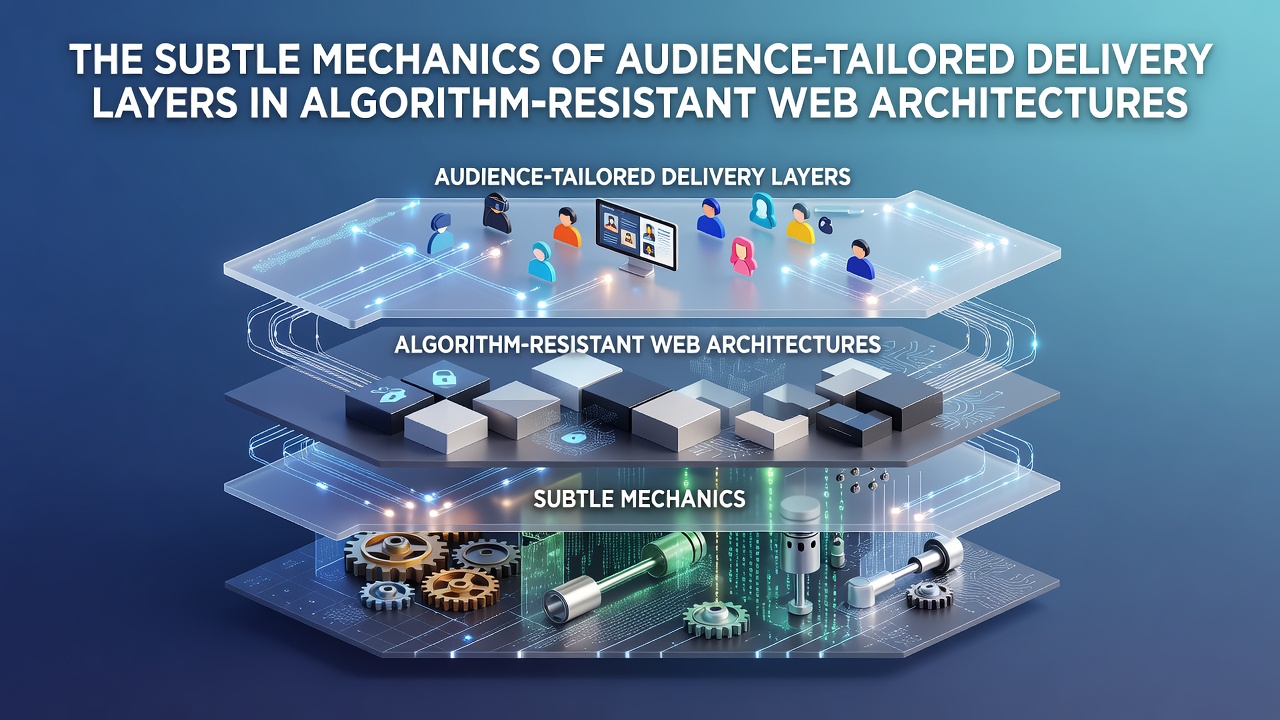
Web architectures that prioritize audience-tailored delivery often incorporate multiple layers to segment and route content based on user signals while maintaining resistance to automated algorithmic scanning and indexing processes. These systems rely on dynamic request handling that evaluates incoming traffic patterns through server-side logic before rendering responses. Data from industry reports shows that such approaches have grown in adoption as organizations seek to balance personalization demands with protections against large-scale crawling operations.
Core Components of Layered Delivery Systems
At the foundation sit request routers that parse headers, cookies, and behavioral indicators to assign users to specific audience cohorts without exposing the underlying decision trees to external parsers. Subsequent layers apply content filters that assemble page elements from modular databases, each calibrated for distinct demographic or interest-based groups. Observers note that this modular approach allows updates to individual segments without triggering widespread structural changes that search algorithms might flag as anomalies.
Researchers at various institutions have documented how these architectures integrate caching mechanisms that vary by layer depth, ensuring that repeated visits from the same cohort receive consistent yet non-identical outputs through subtle variations in asset loading sequences. This variability helps maintain resistance by avoiding predictable response signatures that automated systems typically exploit for pattern recognition.
Integration with Compliance Frameworks
Regulatory developments across regions influence how these delivery layers incorporate data handling protocols. In October 2026, updates to digital service guidelines in multiple jurisdictions prompted architects to refine cohort assignment logic so that it aligns with consent management requirements while preserving segmentation granularity. European data protection frameworks, for instance, emphasize transparency in automated decision-making, which has led developers to embed audit trails within each delivery layer for verification purposes.
North American standards from bodies like the National Institute of Standards and Technology provide additional benchmarks for secure data flows that complement these architectures. One study from a Canadian research consortium revealed that organizations implementing layered systems reduced exposure to unauthorized scraping attempts by routing sensitive cohort data through isolated processing nodes.
Technical Mechanisms for Resistance
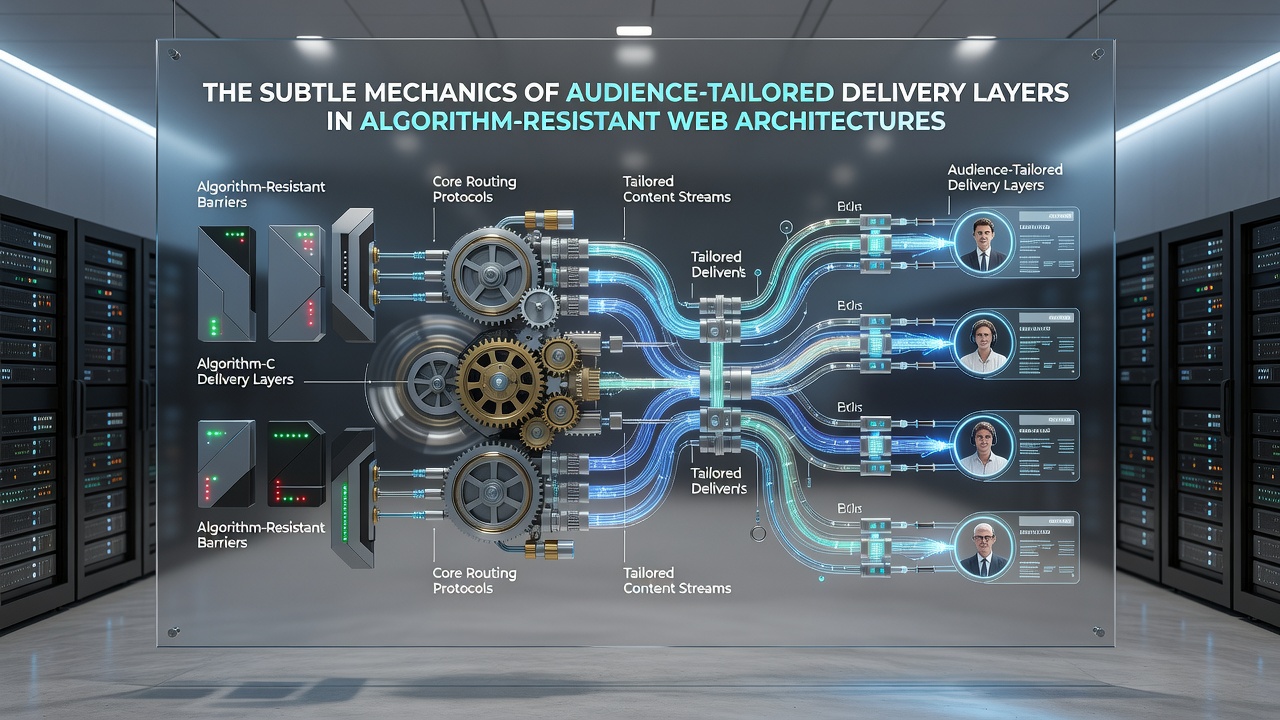
Resistance features typically include randomized element ordering within responses, time-based token validation, and selective obfuscation of metadata that might otherwise reveal segmentation rules. These tactics operate at different stack levels so that a single point of failure does not compromise the entire structure. Industry analyses indicate that when combined with rate-limiting at the network edge, such measures create barriers that discourage sustained algorithmic probing while allowing legitimate user interactions to proceed smoothly.
Take one implementation where traffic from verified sessions passes through an initial authentication layer that cross-references device fingerprints against historical patterns, after which content assembly occurs in a separate environment shielded from direct external queries. This separation ensures that modifications to audience parameters remain internal and do not propagate outward in detectable waves.
Case Examples from Deployment Records
Deployment logs from several enterprise platforms illustrate how audience layers adapt to shifting traffic compositions over extended periods. In one documented rollout, a media property adjusted its middle-tier filters following observed increases in automated requests from specific geographic clusters, resulting in refined cohort boundaries that maintained delivery precision without expanding the overall attack surface. Academic papers on adversarial web interactions further support these patterns by showing correlations between layered segmentation and reduced success rates for content extraction bots.
Additional evidence comes from trade group surveys that track adoption metrics across sectors, highlighting how mid-sized operations have incorporated similar structures to handle regional variations in user expectations while staying aligned with evolving platform guidelines.
Conclusion
The mechanics underlying audience-tailored delivery in algorithm-resistant architectures continue to evolve through iterative refinements driven by both technical constraints and regulatory shifts. Organizations that maintain these systems benefit from the ability to deliver differentiated experiences across cohorts without creating uniform signals that external algorithms can readily map or replicate. Ongoing documentation from research entities and standards organizations provides benchmarks that guide further developments in this domain.